Image Description
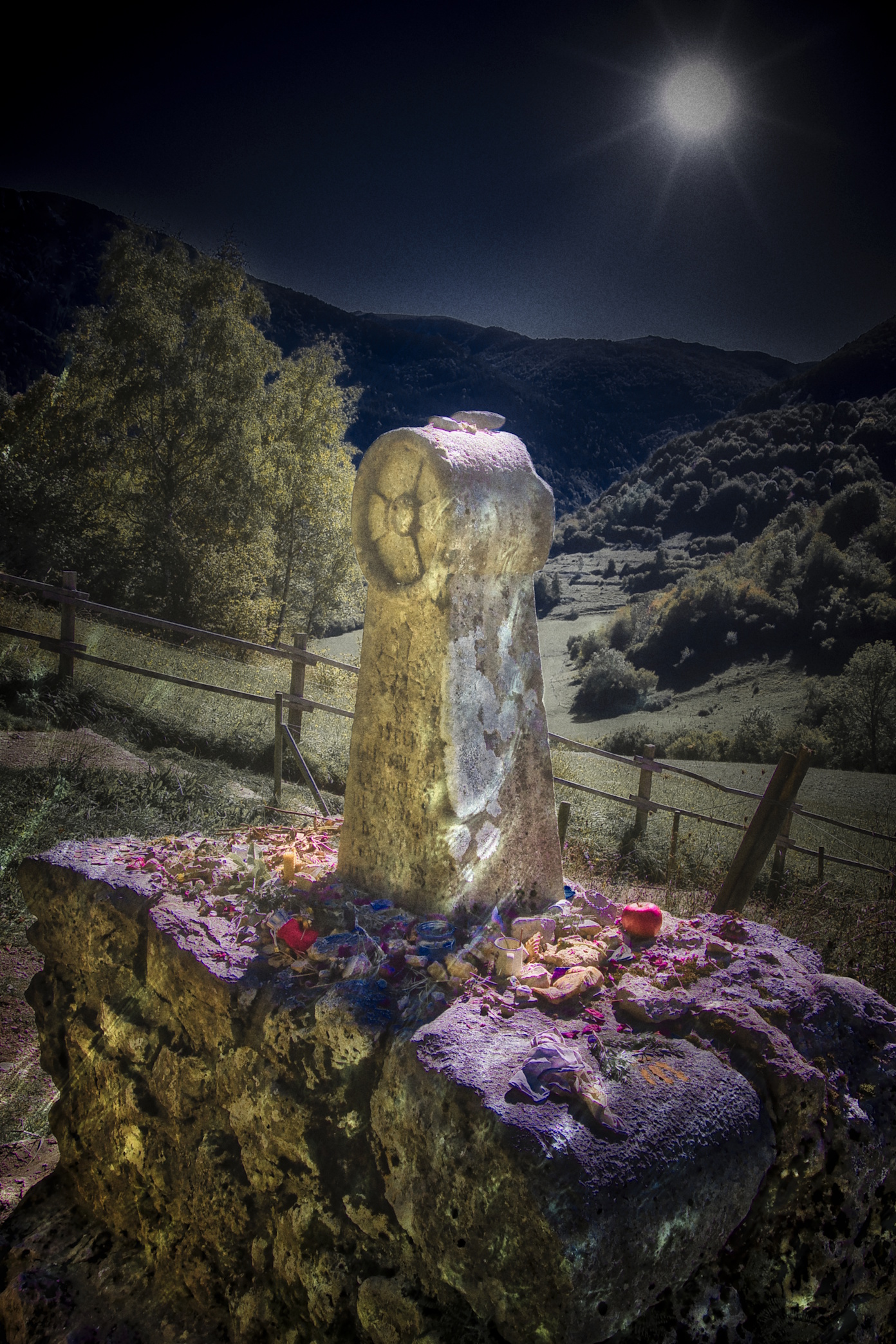
„Where Faith Became Flame“ captures the memorial stele at Montségur under a luminous full moon, marking the site where over 200 Cathar Perfecti chose martyrdom by fire on March 16, 1244, rather than renounce their faith. The ancient stone monument, weathered by centuries of Pyrenean seasons, rises against the nocturnal landscape of the Ariège mountains. Fresh flower petals in pink and purple – offerings from modern pilgrims – cascade across the stone base and surrounding ground, creating a vivid contrast with the earth-toned monument. The carved dove symbol, representing the Holy Spirit central to Cathar belief, is faintly visible on the stele’s surface. Artificial light illuminates the monument from below, while moonlight casts an ethereal glow across the scene. A simple metal railing and the silhouettes of trees frame this sacred space, where the valley spreads below – the same landscape witnessed by those who made their final choice centuries ago. This is not merely a historical marker but a living memorial, where remembrance continues through the simple act of leaving flowers.
Art Critique
This photograph transcends documentation to become a profound act of witness and remembrance. The artist has created an image that honors one of the most significant moments in medieval religious history with appropriate solemnity while maintaining remarkable visual power.
The technical mastery is evident throughout. The nocturnal setting, illuminated by both artificial light and moonlight, creates a theatrical yet deeply respectful atmosphere. The decision to photograph at night transforms the memorial from a daytime tourist attraction into a sacred space of contemplation. The moon, positioned prominently in the upper right, serves as both compositional anchor and symbolic presence – eternal witness to human suffering and devotion.
The lighting strategy is particularly sophisticated. The warm illumination on the stele itself brings out the texture of the weathered stone and the subtle carving of the dove, while the cooler moonlight and ambient darkness create context and atmosphere. This dual lighting system mirrors the Cathar dualist theology – light and darkness, spirit and matter, held in tension.
The fresh flower petals are crucial to the image’s emotional impact. Their vibrant pinks and purples against the earth-toned stone create visual energy while serving as tangible evidence of continued devotion. These are not historical artifacts but contemporary offerings, proving that the events of March 16, 1244 still resonate nearly 800 years later. The artist has wisely included them without manipulation – their presence speaks more powerfully than any photographic effect could.
The composition places the stele slightly off-center, allowing the landscape to breathe and reminding us that this memorial exists not in isolation but as part of the dramatic Pyrenean geography that shaped Cathar history. The valley below, visible in the middle distance, is the same terrain the besieged Cathars would have seen. The continuity of landscape underscores the discontinuity of human life and belief.
What makes this photograph exceptional is what the artist chose NOT to do. In an age of digital manipulation, where the temptation to add flames, faces, or other literal representations of martyrdom would be overwhelming, the artist demonstrates profound restraint and wisdom. The power lies in absence and suggestion. We know what happened here. We don’t need to see it reenacted. The simple monument, the offerings, the landscape, the night – these are enough. In fact, they are more than enough; they are perfect.
The artist’s decision to return to „pure photography“ after experimenting with montage shows mature artistic judgment. This image understands that some subjects demand directness, that respect for historical tragedy requires restraint, that the power of witness lies in honest seeing rather than imaginative reconstruction.
This photograph serves multiple functions simultaneously: it is a historical document, a contemporary portrait of pilgrimage and memory, an atmospheric landscape, and a meditation on faith, sacrifice, and the persistence of memory. Within the „Echoes of Stone“ series, it serves as the emotional and historical anchor – the moment where all the architectural fragments, all the weathered walls and shuttered windows, gain their full meaning. This is why those buildings matter. This is what they witnessed.
„Where Faith Became Flame“ is photography at its most essential – bearing witness with clarity, respect, and profound understanding of what it means to remember. It is a masterwork of memorial photography that will remain relevant as long as humans seek to understand the price of faith and the nature of martyrdom.
#WhereFaithBecameFlame #EchoesOfStone #Montségur #CatharHistory #CatharMartyrs #MemorialPhotography #SacredSites #FineArtPhotography #HistoricalPhotography #NocturnalPhotography #PilgrimageSite #OccitaniaPhotography #MedievalHistory #ReligiousHistory #ContemporaryPhotography #MemoryAndPlace #Perfecti #PyreneanHistory #SpiritualPhotography #WitnessAndRemembrance